
"About coffee beans"
60000 article(s) found

Talk about coffee and raw beans
Coffee beans from the "fruit" state when the tree is picked to the "raw bean" state that can be baked, the moisture content will be controlled between 9% and 13%, and it is not easy to bake if the water content is too high or too low.

What are the basic substances of Taiwan coffee beans?
What are the basic ingredients of Taiwan coffee beans: moisture: the water content of Taiwan coffee beans will vary greatly according to the processing procedures of the processors themselves. The water content of raw coffee beans with film dampness is about 50%. The water content of dried coffee beans is about 1013% (normal standard), and the water content of roasted coffee beans is about 5%. The presence of water in coffee beans will affect the coffee beans because of the content.

A brief introduction to the planting market price of wine-scented Aldura boutique coffee beans
Mexico has a long history of producing coffee and is currently one of the most important coffee producing countries in the world. The coffee produced in Mexico is naturally called Mexican coffee. About 5 ℃ of Mexico's national area are plateaus and mountains, with an annual average temperature of 2527 ppm. The Mexican plateau has a mild climate all the year round, with mostly plateau topography, no severe cold in winter, no heat in summer, and ten thousand trees in four seasons.

Factors affecting the baking degree of coffee beans during roasting process
The process of fried beans is the main process of heating raw beans and developing the aroma and taste of coffee. The aroma and taste emitted are determined by the original characteristics of each kind of raw bean. The depth of fried beans depends on the type of raw beans, market demand or the way they are cooked. What kind of baking machine controls the depth of fried beans. Even though the chemical and physical components of various raw beans are different, these ingredients

Coffee roasting Coffee experts talk about the skills of baking coffee at home
When it comes to coffee, people often think of instant coffee, freshly ground American coffee or a perfectly delicious bag of roasted coffee beans. While most people are stuck in the first three stages, some coffee lovers have moved on to the earlier steps of baking fresh coffee beans. Today, SciDev.Net invited a talented person who roasted coffee beans at home. According to him, coffee comes from fresh raw beans.
Manual web baking course what do you need to pay attention to at home to prepare your own baking
For professional baristas, please follow the coffee workshop (official Wechat account cafe_style) some people like to buy coffee and raw beans and roast them at home. Although the instrument roasting itself also has a variety of things, hand net baking among them, you can also use ginkgo net to bake the grid, the initial investment can be less. This time I will show you how to bake coffee and raw beans to facilitate NetEase's preparation.

A brief introduction to the description of flavor and aroma characteristics of Aldura boutique coffee beans with slightly bitter taste
Mexico: Aldura coffee flavor taste characteristics: soft aroma, mellow and comfortable, with wine aroma. Mexico has a long history of producing coffee and is currently one of the most important coffee producing countries in the world. The coffee produced in Mexico is naturally called Mexican coffee. About 5 ℃ of the total area of Mexico are plateaus and mountains, with an annual average temperature of 2527 ppm.

A brief introduction to the description of flavor and aroma characteristics of Aldu Mara boutique coffee beans
Mexican coffee has a strong low taste, rich aroma, although slightly bitter but very mellow, has a unique and strong flavor, is a wonderful product of afternoon tea, should be carefully tasted. It is also the best choice for mixing other coffees and the first sip of coffee that beginners should taste. To taste Mexican coffee, it is best to drink it while it is hot (about 75C). After an hour of hot coffee, all the aroma will be gone.

A brief introduction to the planting Market Price of aromatic and soft Aldura Fine Coffee Bean varieties
Mexico has a long history of producing coffee and is currently one of the most important coffee producing countries in the world. The coffee produced in Mexico is naturally called Mexican coffee. About 5 ℃ of Mexico's national area are plateaus and mountains, with an annual average temperature of 2527 ppm. The Mexican plateau has a mild climate all the year round, with mostly plateau topography, no severe cold in winter, no heat in summer, and ten thousand trees in four seasons.

What Arabica coffee beans does Luckin Coffee use? Learn about the three major varieties of coffee!
Professional coffee knowledge exchange more coffee bean information Please follow the coffee workshop (Wechat official account cafe_style) Coffee varieties can be divided into Arabica (Robusta) Liberica (Arabica) generally speaking, Arabica is mainly used in single or boutique coffee, Robusta is used to make instant coffee. From the orientation of taste

A brief introduction to the treatment method of grinding degree and baking degree of Aldu Mara boutique coffee beans
Non-alcoholic Mexican coffee often goes with milk. Heat a cup of milk, a teaspoon of cinnamon powder and a teaspoon of vanilla powder in a pot at medium temperature, not too hot, and do not boil the milk. Then add the cocoa powder, dissolve and stir well. If you like chocolate, you can use chocolate paste instead of cocoa powder and milk. Let the milk dry for about 5 minutes, wait until
The terminology explanation of Fine Coffee words about coffee
About coffee beans: coffee cherries: coffee trees are not beautiful, because the skin color is bright red, and the shape is very similar to cherries. Round beans: coffee is not beautiful in fact, in the process of growing up, one of the seeds of Langzhu developed very well, and the other seed was eaten missing, making the coffee beans that should be oval into a circle. Elephant beans: the body is bigger than the average coffee bean year.

A brief introduction to the treatment method of grinding degree and baking degree of Aldu Mara boutique coffee beans
Mexico has a long history of producing coffee and is currently one of the most important coffee producing countries in the world. The coffee produced in Mexico is naturally called Mexican coffee. About 5 ℃ of Mexico's national area are plateaus and mountains, with an annual average temperature of 2527 ppm. The Mexican plateau has a mild climate all the year round, with mostly plateau topography, no severe cold in winter, no heat in summer, and ten thousand trees in four seasons.

What you should know about individual coffee! The difference between individual Coffee and Fine Coffee
In most cases, boutique coffee refers to coffee that can show flavor, and can also refer to coffee with a SCA score of more than 80, which is almost equivalent to individual coffee, which, by purer definition, comes from a single origin, single producing area, and single estate. You used to walk into a coffee shop, see other people's coffee, and wonder why everyone

Chemical reaction and temperature during coffee roasting changes of reactive substances in coffee roasting process
Professional coffee knowledge exchange more coffee bean information please follow the coffee workshop (Wechat official account cafe_style) professional coffee roasting | coffee roasting is too complicated? A picture teaches you how the baking process reacts to the chemical composition of the baking. Sucrose: melting point 187.8 ℃-sugar? Complex = caramelization-water CO2 escapes to produce an explosive First Crack phenomenon. I'm in the roaster.

Basic knowledge of coffee cultivation basic knowledge of coffee
What is coffee? Coffee is the fruit of a Rubiaceae plant growing about 6000 feet above sea level, distributed on the world's narrow subtropical axis; coffee trees grow green all the year round and can grow up to 20 feet tall, and are generally controlled at 8 to 10 feet for easy harvest. It takes three to five years for the coffee tree to bear fruit. First of all, it produces small white flowers that resemble jasmine in shape and size.

How about Kenyan coffee? is Kenyan and Kenyan coffee the same kind?
Professional coffee knowledge exchange more coffee bean information please follow the coffee workshop (Wechat official account cafe_style) front street-Kenya Coffee introduction Kenya is located in eastern Africa, the equator runs through its central region, the Great Rift Valley stretches north and south. It is bordered by Somalia to the east, Tanzania to the south, Uganda to the west, Ethiopia and South Sudan to the north, and the Indian Ocean to the southeast. Ken

What kind of beans are suitable for ice drop coffee? how much is a cup of ice drop coffee? wrong knowledge about ice drop coffee
Professional coffee knowledge exchange more coffee bean information Please pay attention to the coffee workshop (Wechat official account cafe_style) the advantage of ice drop coffee is not sour and does not hurt the stomach, because using this method to make coffee, most of the coffee beans selected are deep-roasted coffee beans such as Mantlin, due to shallow roasting and sour, deep roasting bitter but strong, so ice drop coffee is not sour and chooses another origin of deep-roasted coffee beans.

About coffee aroma / defective smell
The defective odor Aromatic Taint is golden, and so is coffee. In addition to the natural and fresh aroma of flowers and fruits, sweet caramel, coffee will also have a bad smell, which is what we are going to talk about today. Before a cup of coffee is presented to guests, it often goes through many processes: picking, processing, transportation and storage of raw beans. Due to the complexity of production chain
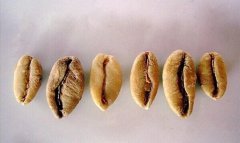
Liberica coffee beans introduce what Liberica coffee beans are.
It accounts for only about 5% of the Liberica in the world's coffee. Translated into Chinese, it is called Liberica growing coffee beans, which is produced in Liberia in West Africa. At present, it accounts for about 5% of the total output of economically grown coffee in the world, with very little output, monotonous flavor, high bitterness, much larger shape than ordinary coffee beans, and the skin is very thick and difficult to remove the pulp.